Lift handbook
How each of the eight lifts is done to the Ironpace standard: the steps, the tester’s commands and what makes a no-rep. Every lift is a 2-rep max, with three attempts on a 3-minute timer.
Back squat
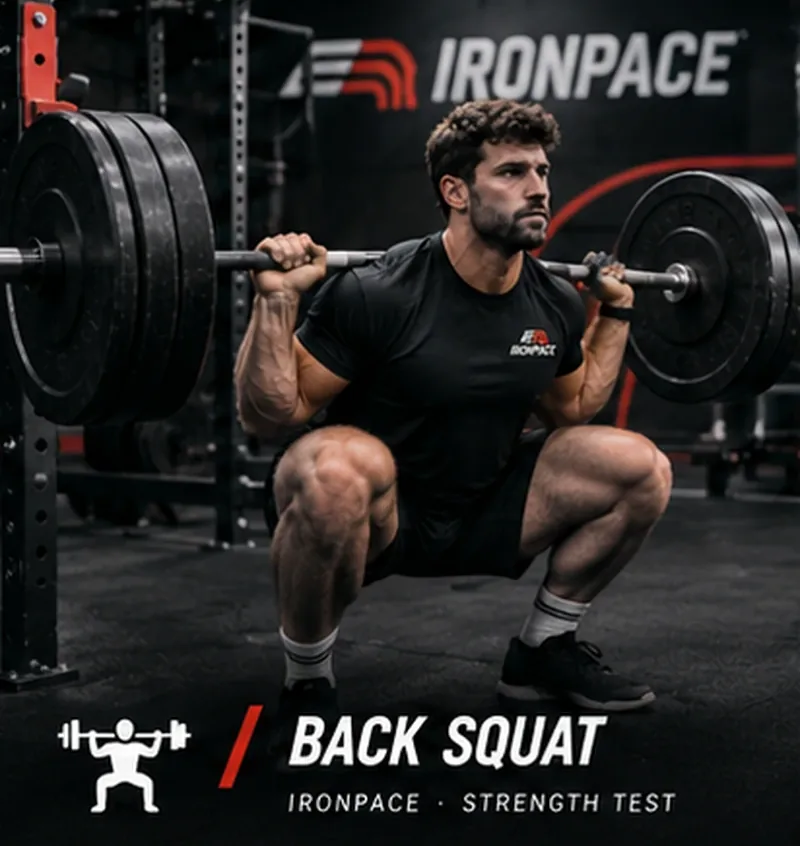
Heaviest load for two reps, in kg
How it’s done
- Take the bar on your upper back, step back from the rack and stand still with your knees and hips locked.
- Wait for “Squat”. Bend at the hips and knees and lower until your hip crease is below the top of your knee.
- Stand back up to full lockout. That is one rep.
- Without racking the bar, squat again to the same depth and stand to lockout.
- Wait for “Rack”, then walk the bar back in.
Commands
“Squat”, then “Rack” after the second rep.
A good lift
Two reps in a row, hip crease below the top of the knee each time, standing to full lockout after each.
No-rep if
- Not deep enough
- The bar moves down on the way up
- Your feet move during the lift
- Starting before “Squat” or racking before “Rack”
- A spotter touches the bar
Kit
Rack with safety arms set just below depth, collars, two spotters.
Where the tester stands
Stand side on at hip height, where the hip crease shows against the top of the knee. Count the reps out loud.
Bench press
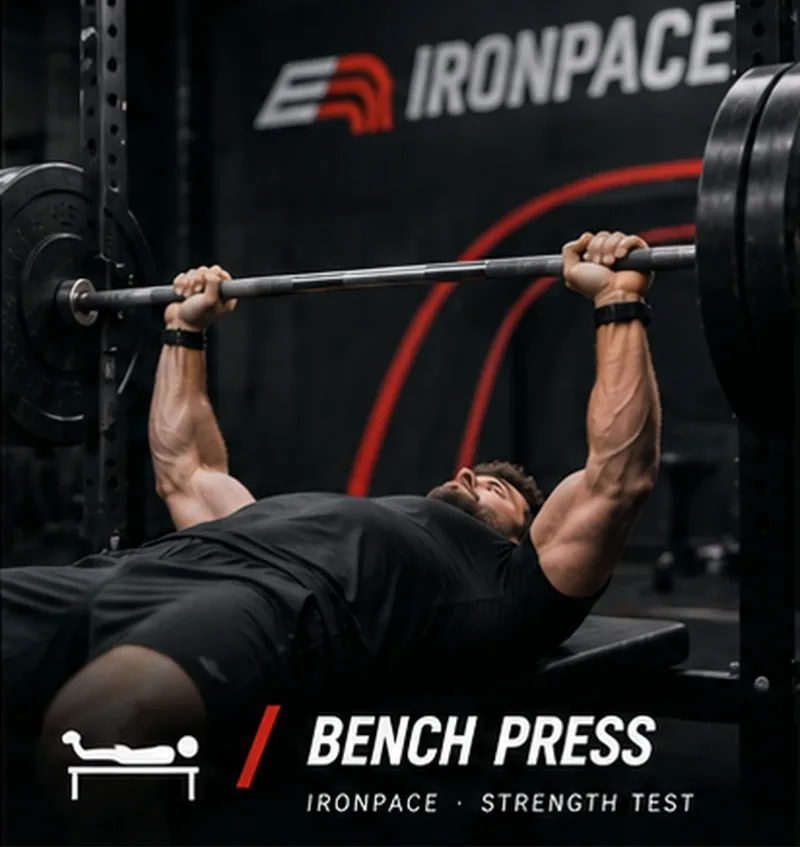
Heaviest load for two reps, in kg
How it’s done
- Lie with your head, shoulders and glutes on the bench and your feet flat on the floor.
- Unrack the bar and hold it still at arm’s length with your elbows locked. Wait for “Start”.
- Lower the bar to your chest and hold it still there. Wait for “Press”.
- Press to full elbow lockout. That is one rep.
- Lower again, hold it still on your chest, and press on the second “Press”.
- Wait for “Rack”, then put the bar back.
Commands
“Start”, then “Press” for each rep, then “Rack” after the second.
A good lift
Two reps in a row, each held still on the chest until “Press” and pressed to full elbow lockout, with head, shoulders and glutes on the bench and feet flat.
No-rep if
- The bar bounces or sinks into your chest
- Your glutes lift off the bench
- The bar moves down on the way up
- Your elbows don’t lock
- Pressing before “Press”
- A spotter touches the bar
Kit
Flat bench with spotter arms or a spotter, collars.
Where the tester stands
Stand at the head end, slightly to one side, where you can see the bar settle on the chest and both elbows lock.
Deadlift
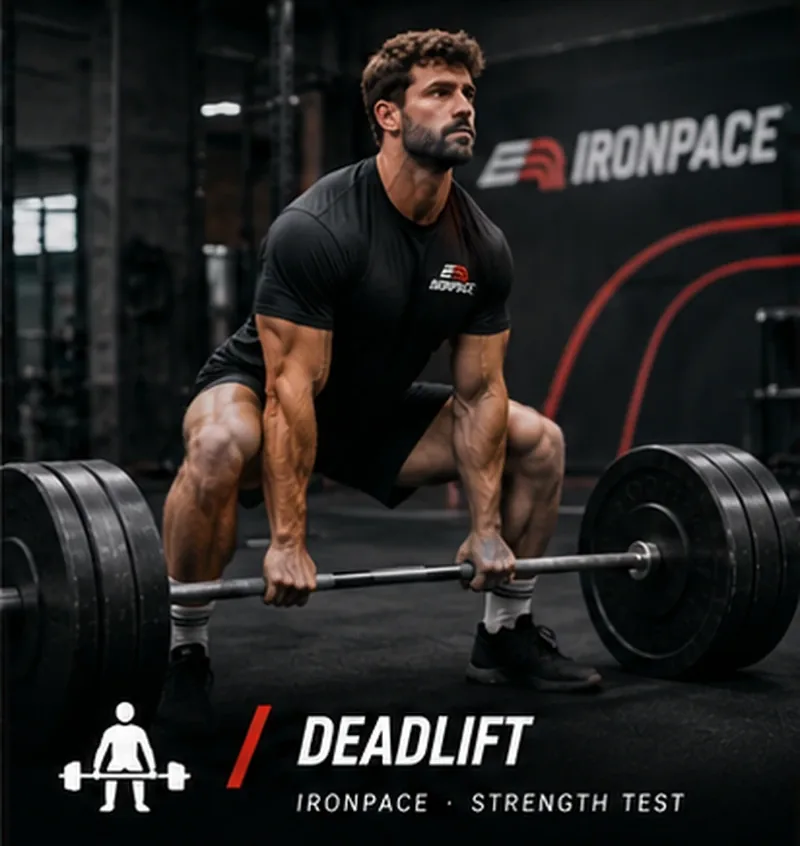
Heaviest load for two reps, in kg
How it’s done
- Set your feet, take your grip and start when you are ready. There is no start command.
- Pull the bar from the floor in one continuous movement until your knees are straight, your hips are through and your shoulders are back.
- Lower the bar to the floor under control, keeping hold of it. That is one rep.
- Let the bar settle, then pull the second rep the same way.
- Hold the lockout and wait for “Down”, then lower the bar under control.
Commands
“Down” after the second rep.
A good lift
Two reps in a row, each one continuous pull to lockout with knees straight, hips through and shoulders back, the bar lowered to the floor under control in between.
No-rep if
- The bar moves down before lockout
- Hitching: resting the bar on your thighs to finish the lift
- Not locked out at the top
- Bouncing the bar off the floor into the second rep
- Dropping the bar from the top
Kit
Platform or suitable floor, collars. Conventional or sumo stance.
Where the tester stands
Stand front on or at 45 degrees, where you can see the knees, hips and shoulders finish together.
Pendlay row
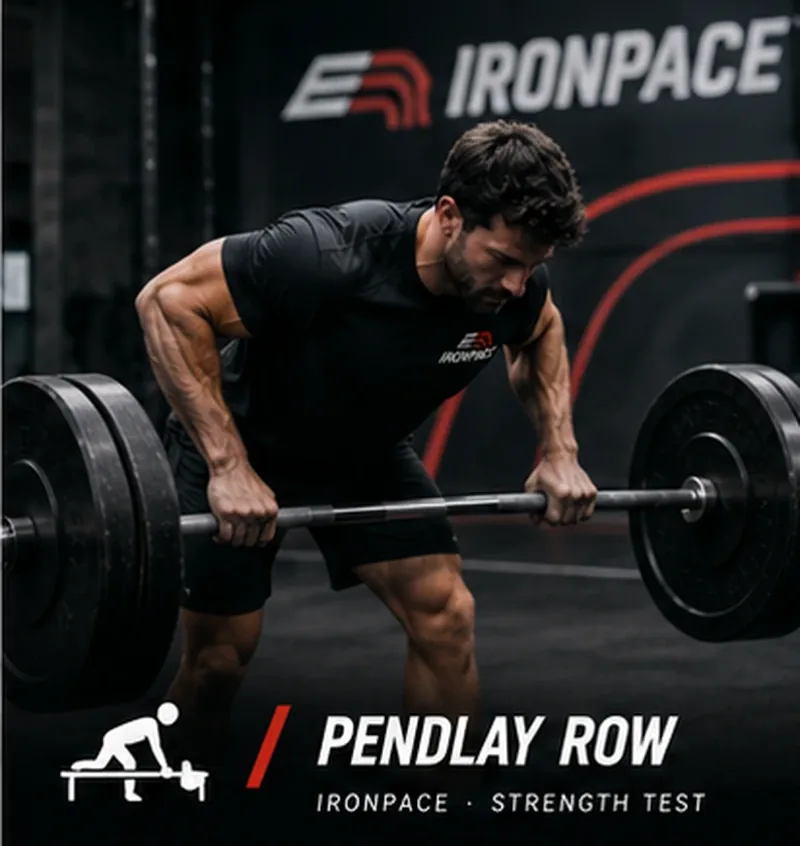
Heaviest load for two reps, in kg
How it’s done
- Stand over the bar and hinge at the hips until your torso is roughly parallel to the floor. Take your grip with the bar at a dead stop on the floor.
- Wait for “Row”. Pull the bar to your lower chest without lifting your torso.
- Lower the bar back to the floor and let it stop dead. That is one rep.
- Row the second rep from the dead stop to your lower chest.
- Wait for “Down”, then lower the bar.
Commands
“Row”, then “Down” after the second rep.
A good lift
Two reps in a row from a dead stop on the floor, torso roughly parallel to the floor, the bar touching the lower chest each time.
No-rep if
- Your torso rises about 30 degrees or more
- The bar doesn’t touch your chest
- Hip drive to start the bar moving
- Bouncing the bar off the floor
Kit
Platform or suitable floor, collars.
Where the tester stands
Stand side on, where you can see the torso angle and the bar touch the chest.
Strict overhead press
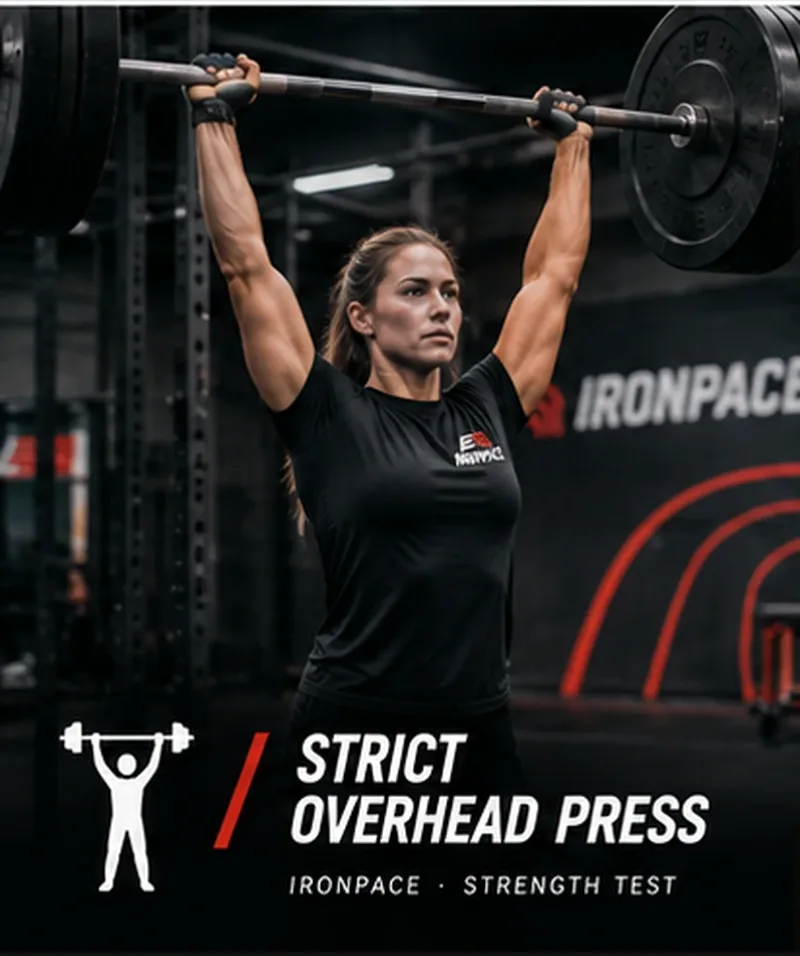
Heaviest load for two reps, in kg
How it’s done
- Take the bar from the rack at your collarbones, step back and stand still with your knees and hips locked.
- Wait for “Press”. Press the bar overhead until your elbows lock, keeping your legs straight and your heels down.
- Lower the bar back to your collarbones. That is one rep.
- Press the second rep to lockout the same way.
- Wait for “Rack”, then walk the bar back in.
Commands
“Press”, then “Rack” after the second rep.
A good lift
Two reps in a row from the collarbones to full lockout overhead, legs locked throughout.
No-rep if
- A knee dip or any leg drive
- Your heels lift
- Your elbows don’t lock
- The bar moves down on the way up
Kit
Rack, collars.
Where the tester stands
Stand side on, where you can see the knees stay locked and the elbows finish straight.
Weighted pull-up
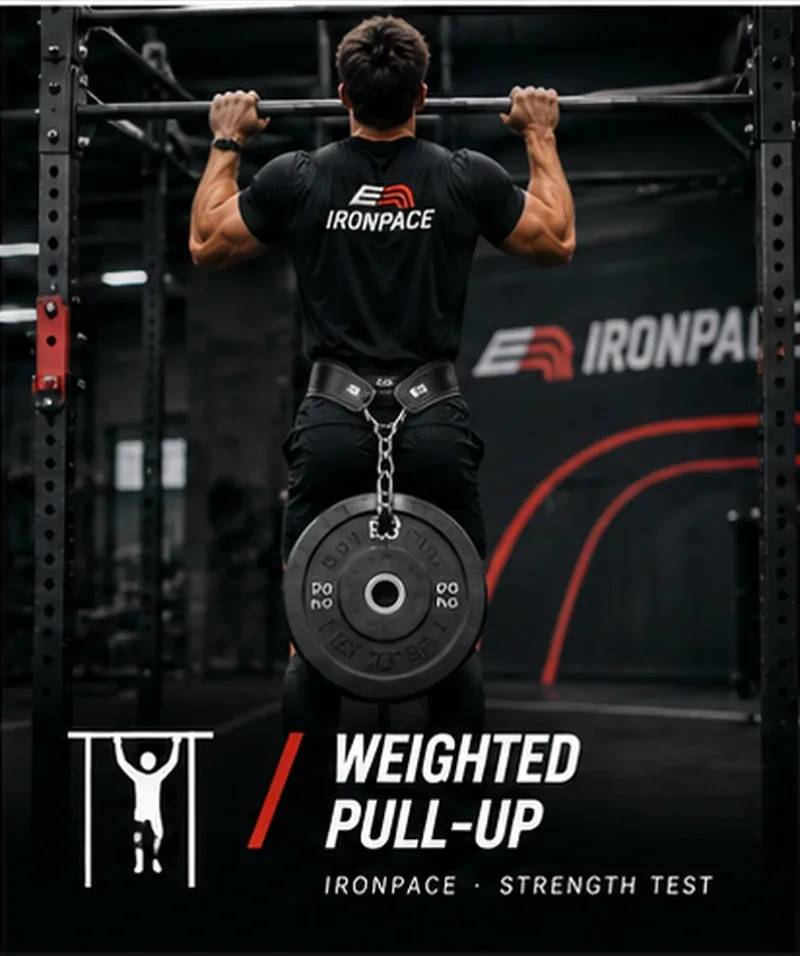
Load added to your bodyweight for two reps, in kg
How it’s done
- Load the dip belt, take your grip and hang with your arms straight and your feet off the floor.
- Wait for “Go”. Pull until your chin is clearly over the bar.
- Lower to a full dead hang with your arms straight. That is one rep.
- Pull the second rep from the dead hang until your chin is clearly over the bar.
- Lower under control and step down.
Commands
“Go”.
A good lift
Two reps in a row from a dead hang, chin clearly over the bar, back to a full dead hang between reps. A bodyweight double scores 0 kg added.
No-rep if
- Your chin stops short of the bar
- Your arms aren’t straight at the bottom
- Kipping or swinging
- Your feet touch the floor
Kit
Pull-up bar, dip belt, plates. Loads go up in 2.5 kg steps from 5 kg, and the belt and plates are weighed before the test.
Where the tester stands
Stand side on at bar height, where you can see the chin clear the bar and the arms straighten.
Weighted dip
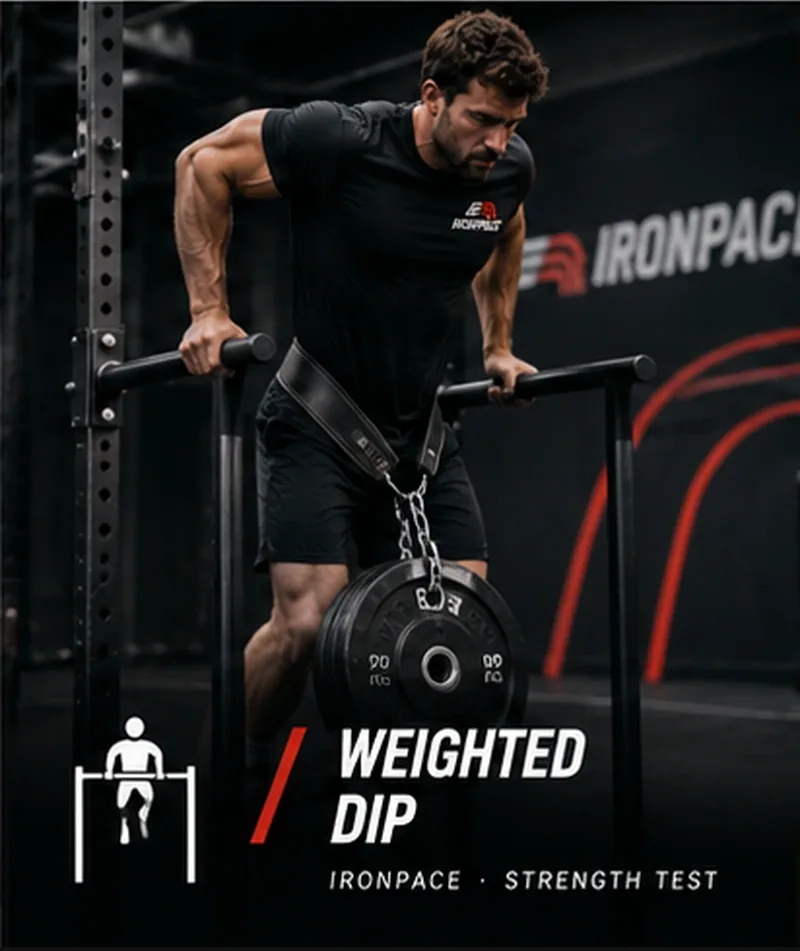
Load added to your bodyweight for two reps, in kg
How it’s done
- Load the dip belt and get to the top of the bars with your elbows locked and your feet off the floor.
- Wait for “Go”. Lower until your shoulder is below your elbow.
- Press back up to full lockout. That is one rep.
- Lower to the same depth and press the second rep to lockout.
- Step down under control.
Commands
“Go”.
A good lift
Two reps in a row, starting locked out, shoulder below the elbow at the bottom, pressing back to full lockout each time.
No-rep if
- Your shoulder doesn’t go below your elbow
- No lockout at the top
- Kipping, swinging or a leg kick
- Your feet touch the floor
Kit
Parallel dip bars, dip belt, plates. Loading is the same as the pull-up.
Where the tester stands
Stand side on at elbow height, where you can see the shoulder drop below the elbow.
Loaded carry
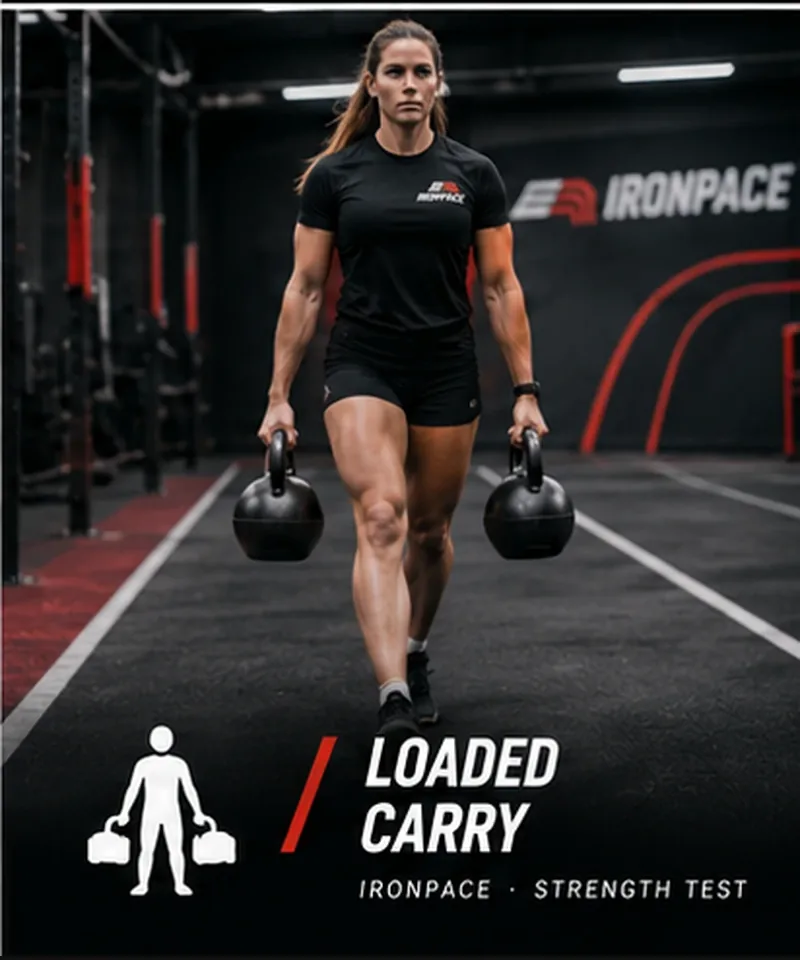
Heaviest load over 20 metres, in kg. Time breaks ties
How it’s done
- Stand behind the start line with one handle in each hand.
- Walk out when you are ready. The watch starts on your first step.
- Walk 10 metres, go once round the cone and walk back.
- Cross the start line still holding both handles. The watch stops when both handles cross the line.
Commands
No command: the watch starts on your first step.
A good lift
10 metres out, once round the cone and back across the start line, holding both handles the whole way.
No-rep if
- A handle is dropped or set down
- Cutting inside the cone
- Resting the handles on your body to take the load
Kit
Farmer’s handles or dumbbells, a cone, a marked 10 m lane, a stopwatch.
Where the tester stands
Stand at the start line with the watch, with a clear view of the cone. Clear the lane before every attempt.
On every lift
- Two good reps in a row make a good lift. If either rep is a no-rep, the attempt is a no-rep.
- You get three attempts. The weight can go up or stay the same, and it can’t go down after a good lift.
- A 3-minute timer runs between attempts and between lifts. Your next attempt must start before it runs out.
- Wait for your tester’s commands. Moving before a command is a no-rep.
- Belts, sleeves and chalk are allowed. Lifting straps are not.
- Your tester can stop any attempt at any time for safety. A stopped attempt is a no-rep.
The full rules, the runs, the League and the Ultimate are in the rules and standards.